

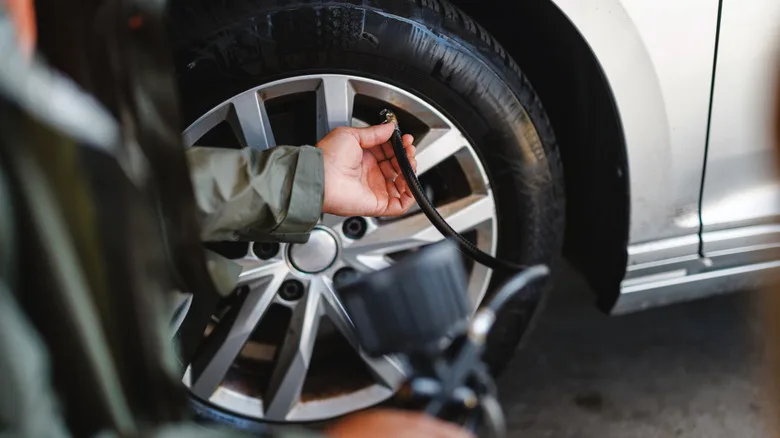
Driving every day on underinflated tires increases rolling resistance, meaning the engine must work harder to keep the vehicle moving. Incorrect pressure can also affect handling, tire wear, and overall driving feel.
Checking inflation regularly takes only a small amount of effort, yet it addresses one of the easiest fuel-efficiency problems to overlook.
Why Tire Pressure Changes Driving Efficiency
A tire flexes as it meets the road. When pressure is too low, the tire can deform more than intended and increase resistance as it rolls.
That extra resistance requires additional energy from the engine. The effect may feel subtle from the driver’s seat, which is why low pressure can remain unnoticed until a dashboard warning appears or tire wear becomes obvious.
Visual Checks Are Not Enough
A tire can look normal while still being below the recommended pressure. Modern tire designs make judging inflation by appearance unreliable.
Use a tire-pressure gauge instead.
Find the Correct Pressure for Your Vehicle
The recommended cold tire pressure is normally listed on the vehicle information placard, commonly located around the driver’s door or door frame. The owner’s manual may provide additional guidance.
General vehicle care information can complement routine maintenance, but the vehicle manufacturer’s specification should determine the pressure you actually use.
Do not automatically inflate tires to the maximum pressure molded into the tire sidewall. That figure serves a different purpose from the vehicle’s recommended operating pressure.
Check Tires When They Are Cold
Tire pressure changes as tires warm during driving, so cold readings provide a more consistent reference. Check them before a long drive or after the vehicle has been parked long enough for the tires to cool.
Building home garage tire checks into a regular routine makes pressure problems easier to catch before they affect daily driving.
| Check | What to Look For | Action |
|---|---|---|
| Pressure | Compare with placard | Adjust when cold |
| Tread | Uneven wear | Inspect cause |
| Sidewall | Cuts or bulges | Seek tire advice |
| Valve | Leakage or damage | Repair if needed |
Expect Pressure to Change With Conditions
Temperature changes can influence tire pressure, so a tire that was correctly inflated weeks ago may not remain at the same reading indefinitely. Small leaks, valve problems, wheel damage, or punctures can also cause gradual pressure loss.
Readers exploring broader car maintenance references should treat repeated pressure loss as a possible maintenance issue rather than endlessly topping up the same tire.
If one tire consistently loses air faster than the others, have it inspected.
Common Pressure Mistakes to Avoid
Overinflating tires in an attempt to maximize fuel economy is not a smart shortcut. The correct target is the pressure specified for the vehicle under the applicable conditions.
Another mistake is adjusting pressure immediately after highway driving and treating the warm reading as though it were a cold measurement.
Drivers should also avoid relying only on the tire-pressure monitoring system. The warning system is useful, but routine manual checks can identify gradual changes before they become more noticeable.
Frequently Asked Questions
How often should tire pressure be checked?
Check it regularly and before longer trips, following guidance in the vehicle owner’s manual. Tires can gradually lose pressure, and changing temperatures may alter readings even when no obvious puncture exists.
Should I use the pressure printed on the tire?
Use the vehicle manufacturer’s recommended pressure rather than automatically inflating to the maximum figure molded into the tire sidewall. Check the door placard or owner’s manual for the correct specification.
Can low tire pressure increase fuel use?
Yes. Underinflation can increase rolling resistance, requiring more energy to move the vehicle. The actual effect depends on the degree of underinflation and driving conditions.
Keep Pressure Part of Routine Maintenance
Tire pressure is easy to ignore because gradual changes rarely transform the way a vehicle feels overnight. Yet driving day after day with incorrect inflation can affect efficiency, tire life, and handling.
Keep a reliable gauge available, check pressures when the tires are cold, follow the vehicle placard, and investigate any tire that repeatedly loses air.