

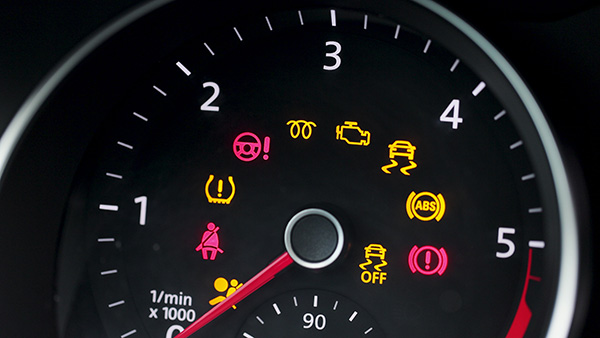
A dashboard gauge that reads incorrectly doesn’t automatically mean the instrument cluster has failed. Temperature, fuel-level, oil-pressure, and other displays often depend on sensors, sending units, wiring, network communication, and stable electrical power.
Checking those inputs first can prevent an expensive cluster replacement that leaves the original problem untouched.
Determine Whether One Gauge or Several Are Affected
The pattern of failure provides an important clue. A single inaccurate gauge may point toward its sensor, sender, connector, or circuit.
Several gauges failing together can suggest a broader power, ground, communication, or instrument-cluster problem. Warning lights, flickering displays, and other electrical symptoms should be noted at the same time.
Anyone reviewing general online references should compare possibilities with the vehicle’s actual symptom pattern rather than assuming every dashboard fault has the same cause.
Sensors and Sending Units Can Create False Readings
Many gauges display information supplied by another component. A coolant-temperature sensor, fuel-level sending unit, or related circuit can provide incorrect information even though the gauge itself is capable of displaying accurately.
That distinction matters because replacing the cluster cannot correct a faulty signal arriving from elsewhere.
| Gauge Problem | Possible Source | Useful Check |
|---|---|---|
| Fuel level inaccurate | Tank sender or wiring | Compare sender signal |
| Temperature reading wrong | Sensor or circuit | Check scan data |
| Several gauges dead | Power, ground, network | Inspect shared circuits |
| Display flickers | Voltage or cluster connection | Check supply stability |
Compare Gauge Information With Other Data
A scan tool can sometimes provide sensor information independently of the dashboard display. If electronic data shows a reasonable coolant temperature while the dashboard indication is clearly wrong, diagnosis can move toward the display circuit or communication path.
Broader vehicle research material can help owners understand terminology, but direct comparison between commanded or measured data and the displayed reading is much more useful.
For fuel-level issues, diagnosis may require testing the sender circuit rather than relying on visual dashboard behavior alone.
Inspect Power, Grounds, and Connections
Instrument clusters and sensors need reliable electrical supply. Voltage problems, corroded grounds, loose connectors, damaged wiring, or previous dashboard work can create confusing symptoms.
Reviewing general web material may produce long lists of possible faults, but shared electrical connections deserve special attention when multiple gauges behave strangely at once.
Low battery voltage can also create unusual electronic behavior, especially during starting.
Network Communication Can Matter
Newer vehicles often share information between control modules over communication networks. A gauge may therefore depend on sensor data passing through another module before reaching the display.
Network faults require a different diagnostic approach from older direct-wire gauge systems.
Why Cluster Replacement Is Often Too Early
Instrument clusters can fail, but replacing one based only on a bad reading skips several cheaper possibilities. A damaged sensor, poor ground, broken wire, or communication fault can remain after the new cluster is installed.
Programming may also be required for replacement clusters on some vehicles. That makes confirmation of the actual fault even more important before purchasing parts.
Frequently Asked Questions
Why does my fuel gauge stay on full?
A faulty fuel-level sender, damaged wiring, connector problem, or instrument fault can cause an incorrect full reading. Testing the sender circuit helps narrow the cause.
Can a weak battery affect dashboard gauges?
Yes. Low or unstable system voltage can create unusual electronic symptoms, especially during starting. Battery and charging-system condition are useful baseline checks when several displays act abnormally.
Why does my temperature gauge move suddenly?
Rapid changes can result from an electrical signal problem, but genuine cooling-system problems can also affect temperature. Treat overheating indications seriously until the actual engine temperature is confirmed safely.
Test the Information Feeding the Gauge
Dashboard displays are the end of an information chain. Before replacing the cluster, determine whether the sensor is producing a sensible signal and whether wiring, power, grounds, and communication paths are working.
That diagnostic order turns an uncertain dashboard symptom into a manageable electrical problem and reduces unnecessary parts replacement.