

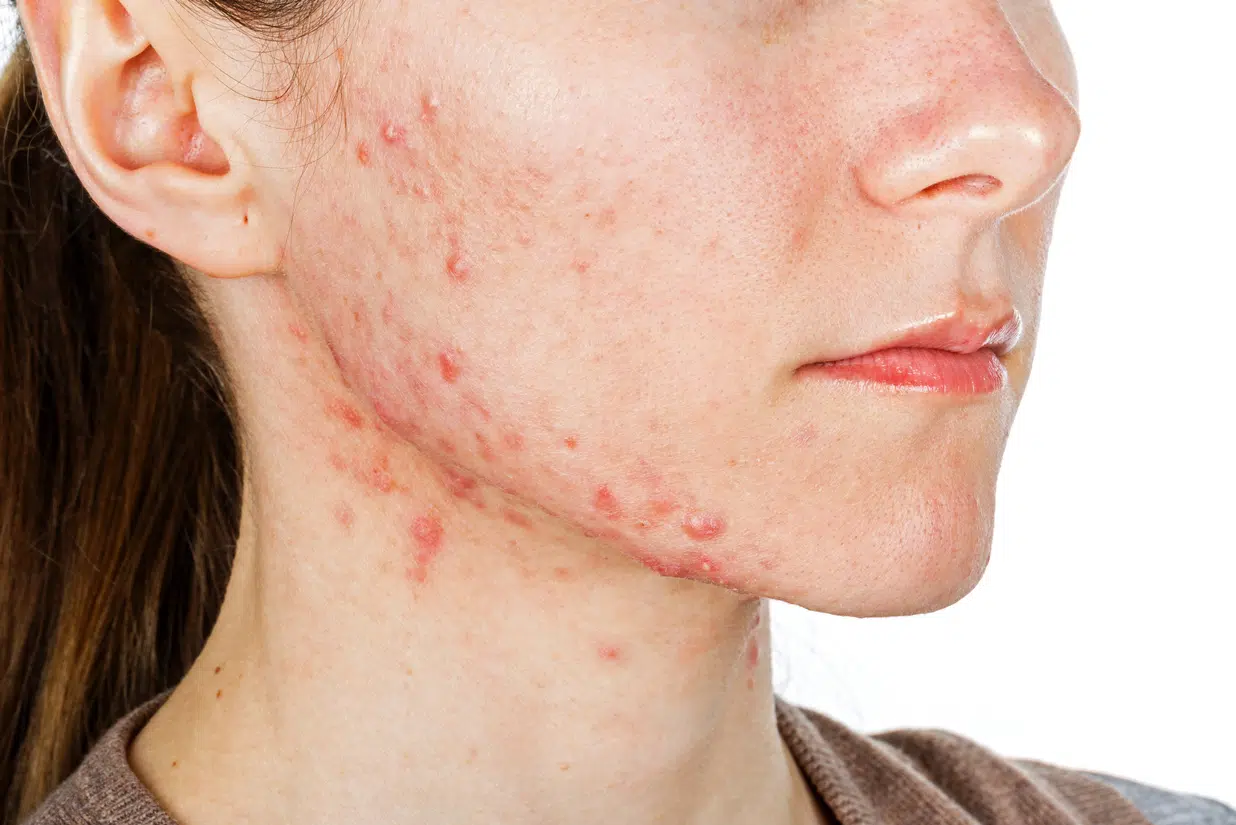
Hormonal skin breakouts can appear when changing hormone levels influence oil production and acne activity. Adults may notice breakouts around menstrual periods, pregnancy, perimenopause, menopause, or other hormonal shifts. A simple routine and a record of when acne flares can be more informative than frequently changing products whenever a new blemish appears.
What Can Hormonal Breakout Patterns Look Like?
Adult acne can involve blackheads, whiteheads, inflamed bumps, or deeper painful lesions. Hormone-related flares may follow a repeating schedule, such as appearing around the same part of the menstrual cycle.
People browsing general self-care material may see the term “hormonal acne” used broadly. Timing can suggest a hormonal influence, but appearance alone cannot identify the exact cause of acne.
Why Does a Simple Routine Often Make Tracking Easier?
Constantly rotating cleansers, scrubs, masks, spot treatments, and oils makes it difficult to know what helps and what irritates your skin. A basic routine usually starts with gentle cleansing, non-comedogenic moisturizer, and sun protection.
While comparing everyday skin and wellness topics, keep changes gradual. Starting several active products at once can create dryness, irritation, or peeling that may be mistaken for worsening acne.
What Should You Record During a Breakout?
A short log can reveal connections that are easy to miss when looking at individual pimples.
| Detail | What to Record | Possible Use |
|---|---|---|
| Timing | Cycle or hormonal stage | Shows recurrence |
| Location | Jaw, face, chest, back | Tracks pattern |
| Products | New or recently changed | Spots irritation |
| Severity | Mild to painful lesions | Shows progression |
The American Academy of Dermatology discusses fluctuating hormone levels as one contributor to adult acne in its adult acne guidance. Hormones are only one part of the picture, so persistent acne may still require a broader dermatologic assessment.
Everyday Triggers Can Complicate the Picture
Hair products, cosmetics, friction, sweating, picking, stress, and skin irritation can affect breakouts independently of hormones. Tracking these factors alongside cycle timing may reveal whether several triggers are operating together.
General healthy-lifestyle reading can provide ideas for simplifying routines, but treatment decisions should come from reliable dermatology guidance. Pregnancy is especially important because some common acne medicines are not appropriate during pregnancy and require professional review.
Common Mistakes That Can Make Breakouts Harder to Manage
Aggressive scrubbing does not remove acne from inside the pores and can irritate already inflamed skin. Squeezing or picking lesions may also increase inflammation and the likelihood of visible marks.
Another mistake is expecting every breakout to disappear immediately after changing one product. Acne improvement often takes time, and frequent switching may prevent you from seeing whether a tolerable routine is actually helping.
When Should You See a Dermatologist?
Consider professional care when acne is painful, deep, scarring, widespread, persistent, suddenly severe, or affecting your confidence and daily life. A dermatologist can also assess whether another condition resembles acne or whether hormonal symptoms suggest a need for additional evaluation.
Seek timely medical advice for severe skin swelling, blistering, signs of infection, or a significant reaction after starting a product or medication. Pregnancy or plans for pregnancy should also be mentioned before using acne treatments.
Frequently Asked Questions
Does acne around my period mean hormones are responsible?
Hormonal fluctuations may contribute when breakouts repeatedly occur around menstruation, but timing alone cannot prove the cause. Skin products, stress, friction, and other factors can contribute at the same time.
Should oily skin be washed more often?
More washing is not always better. Excessive cleansing or scrubbing can irritate the skin. Gentle cleansing according to dermatology guidance is usually preferable to repeatedly stripping away oil.
Can adult acne start even if I had clear skin as a teenager?
Yes. Adult-onset acne can develop even in people who did not experience significant teenage acne. Hormonal changes are among several factors that may contribute.
Simplify First, Then Look for Patterns
Hormonal breakouts are easier to evaluate when your routine is stable enough to reveal what is changing. Keep products gentle, introduce new treatments carefully, and record timing, location, and severity. If acne becomes painful, persistent, scarring, or difficult to control, a dermatologist can help identify the pattern and choose treatment appropriate for your circumstances.
This article is for general informational purposes and is not a substitute for professional medical advice, diagnosis, or treatment.