

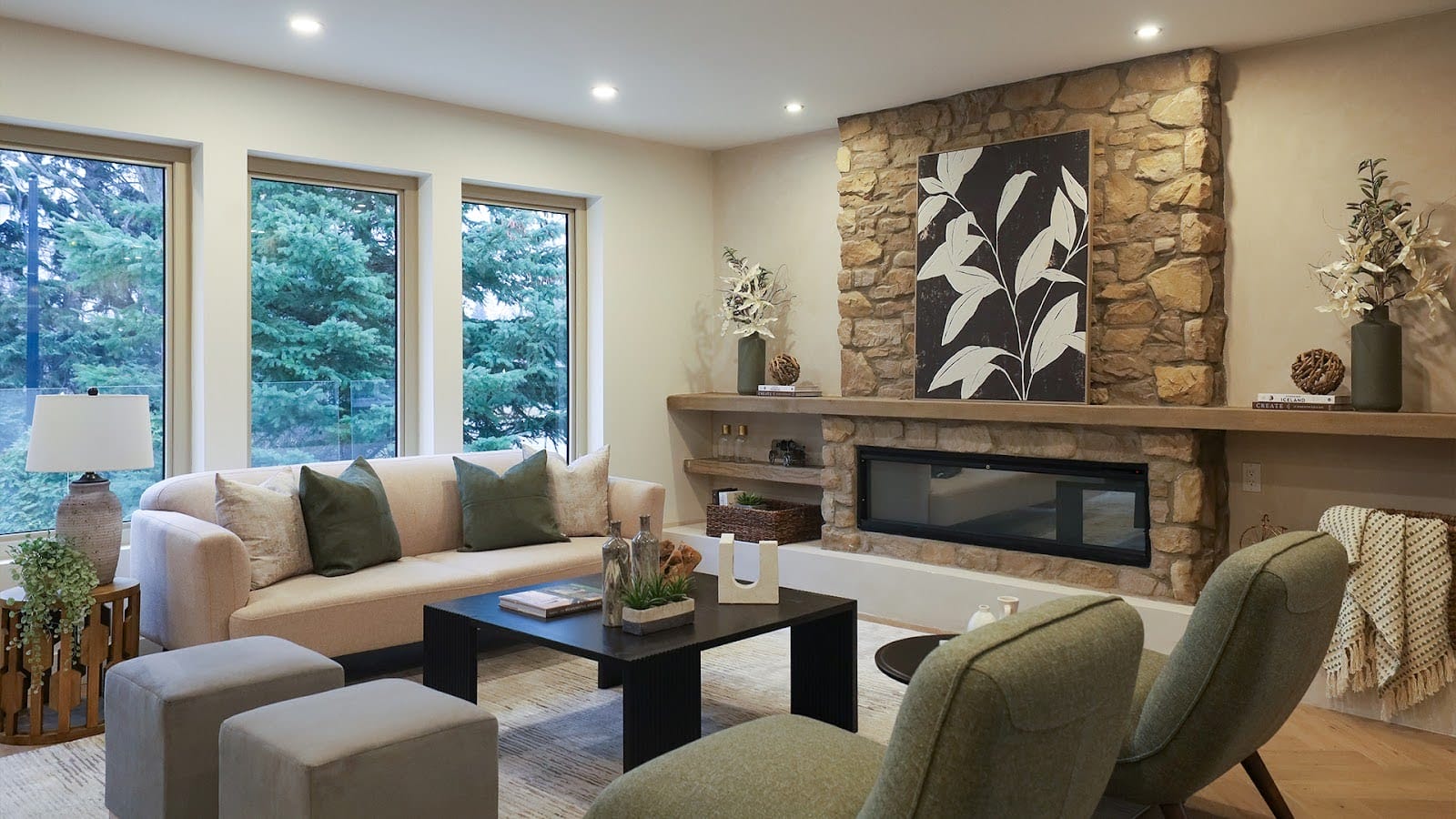
Vacant rooms can look clean and spacious, yet they sometimes feel smaller, colder, or harder to understand in photographs and showings. Empty home problems often come from missing scale and purpose. Simple staging can help buyers read each room without requiring a fully furnished property or an expensive redesign.
Give Important Rooms an Obvious Purpose
Start with spaces where furniture helps explain size and function. A living room, primary bedroom, dining area, or unusually shaped room usually benefits more from staging than a hallway or secondary storage area.
A few correctly sized pieces can establish scale without filling every corner.
Use Less Furniture Than an Occupied Home
Vacant-property staging works best when each item has a clear job. A sofa may establish the living zone, while a bed and two simple side pieces can show how a bedroom functions.
Extra furniture can quickly erase the spaciousness that vacancy initially provides.
Focus Attention on the Property Itself
Staging should support architectural features rather than compete with them. Arrange pieces so buyers notice windows, fireplaces, flooring, built-ins, views, and useful circulation paths.
Property owners exploring home and land inspiration may find ideas for thinking about how interior and exterior features work together, but staging choices should remain specific to the room being shown.
Add Softness Without Creating Clutter
Rugs, lamps, neutral bedding, simple artwork, and a few restrained accessories can make vacant rooms feel more comfortable. The goal is visual warmth, not decoration for its own sake.
Exterior presentation also matters. Basic concepts from landscape-focused design may encourage attention to entry paths, patios, or visible planting areas so the transition into the empty interior feels intentional.
| Space | Simple Staging Choice | Purpose |
|---|---|---|
| Living room | Sofa and rug | Shows scale |
| Bedroom | Bed and lamps | Defines function |
| Dining area | Table and chairs | Clarifies layout |
| Entry | Small console or bench | Adds welcome |
Use Style as a Supporting Layer
Consistency helps a staged home feel settled. Furniture does not need to match perfectly, but wildly different styles can distract buyers from the property.
Ideas around refined home presentation may inspire a restrained direction for fabrics, furniture shapes, and decorative accents. Keep the palette and accessories quiet enough that permanent features remain the visual priority.
What Sellers Often Get Wrong
A common assumption is that every empty room must be staged. That can waste money and may make a straightforward property feel overly arranged. Focus first on rooms where buyers need help understanding scale, function, or furniture placement.
Another mistake is using furniture that is too small. Tiny pieces can make a large room appear awkward rather than spacious. Accurate scale matters more than simply putting something in the room.
Frequently Asked Questions
Does every room in an empty house need staging?
No. Prioritize main living spaces and rooms whose purpose or dimensions are difficult to understand without furniture. Secondary rooms may need little more than excellent cleaning, lighting, and clear sightlines.
Can virtual staging replace physical staging?
Virtual staging may help online presentation, but buyers visiting the property will still encounter vacant rooms. Any digitally staged images should accurately represent the property and follow applicable listing-platform or professional disclosure practices.
What makes vacant rooms feel warmer?
Appropriately scaled furniture, layered lighting, rugs, simple textiles, restrained artwork, and clean windows can reduce the cold feeling of an empty space. A few purposeful pieces are usually more effective than numerous decorative accessories.
Stage the Rooms That Need Explanation
Vacancy doesn’t automatically make a home harder to sell, and staging doesn’t need to transform every room. Concentrate resources where furniture improves scale, function, or emotional comfort. A restrained setup that helps buyers understand the property is more useful than decoration that becomes the main attraction.