

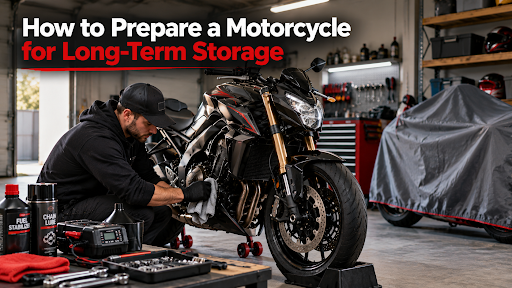
Motorcycles may remain unused for several weeks or months because of seasonal weather, travel, or changes in riding routines. Leaving a motorcycle parked without proper preparation can lead to battery problems, fuel deterioration, corrosion, and tire issues. A few practical steps before storage can help protect its components and make returning to the road easier.
Choose a Suitable Storage Location
A dry, secure, and well-ventilated location is ideal for motorcycle storage. A garage or covered storage area can protect the vehicle from rain, direct sunlight, dust, and temperature fluctuations. Outdoor storage may expose metal components and electrical connections to moisture, increasing the risk of corrosion.
If indoor storage is unavailable, use a breathable motorcycle cover designed for outdoor conditions. Avoid trapping moisture beneath a cover, particularly after riding in rain or washing the motorcycle.
Clean and Protect the Motorcycle
Clean the motorcycle before putting it away. Dirt, insects, road salt, and other contaminants can damage finishes or encourage corrosion if left on surfaces for extended periods. Wash the exterior using suitable cleaning products, dry it thoroughly, and pay attention to areas where water may collect.
Inspect exposed metal components and apply an appropriate protective product where recommended by the manufacturer. Lubricate the chain if the motorcycle has one, following the owner’s manual. Make sure the motorcycle is completely dry before covering it.
Prepare the Fuel System and Fluids
Fuel management is an important consideration when a motorcycle will remain unused for an extended period. Gasoline can deteriorate over time, potentially contributing to starting difficulties and deposits in the fuel system.
Follow the manufacturer’s recommendations for the expected storage period and fuel system. If a fuel stabilizer is appropriate, use a compatible product according to its instructions. Never drain fuel or handle gasoline near flames, sparks, or other ignition sources.
Check engine oil, coolant where applicable, brake fluid, and other service items according to the maintenance schedule. For a pre-storage inspection or help with routine maintenance, a qualified service department can help identify issues that should be addressed before the motorcycle is parked.
Protect the Battery
A motorcycle battery can lose charge while the vehicle is not in use. Cold temperatures and an aging battery may make the problem more noticeable. Check the battery’s condition and follow the manufacturer’s recommendations for maintaining it during storage.
A compatible battery maintainer can help preserve charge when used correctly. Confirm that the device suits the battery type and follow all safety instructions. If the battery must be disconnected, consult the owner’s manual for the correct procedure.
Inspect battery terminals for corrosion and ensure connections are secure. Suitable replacement components and accessories can be researched through the dealership’s parts department.
Check Tires and Support the Motorcycle
Inspect both tires for cracks, damage, embedded objects, and unusual wear. Inflate them to the pressure specified by the motorcycle manufacturer, rather than relying on the maximum pressure printed on the tire sidewall.
Long periods in one position can contribute to localized tire stress. Where appropriate, use a suitable motorcycle stand or reposition the motorcycle periodically according to the manufacturer’s guidance. Ensure the vehicle remains stable and cannot fall while stored.
If a component requires replacement before storage, parts diagrams can help identify the correct part for the specific vehicle.
Follow Model-Specific Storage Instructions
Storage procedures can differ according to engine design, fuel system, battery type, and manufacturer recommendations. Riders should consult the owner’s manual for precise instructions about fluid checks, battery maintenance, and preparation intervals.
Owners of Yamaha motorcycles should follow the instructions for their particular model rather than assuming every motorcycle requires identical preparation.
The same principle applies to Kawasaki motorcycles, as recommended procedures may differ across models and model years.
Conclusion
Preparing a motorcycle for long-term storage involves more than parking it in a garage. Cleaning, protecting the fuel system, maintaining the battery, checking tires, and choosing a suitable location can help prevent common storage-related problems.
Before riding again, inspect the motorcycle, check fluid levels and tire pressure, test the lights and brakes, and look for leaks or signs of damage. Following the manufacturer’s guidance helps make storage and the return to regular riding safer and more straightforward.
Frequently Asked Questions
1. How long can a motorcycle remain in storage?
The appropriate storage period depends on the motorcycle’s condition and preparation. Even during shorter periods of inactivity, checking the battery and protecting the vehicle from moisture can be beneficial.
2. Should I start my motorcycle occasionally during storage?
Starting it briefly without allowing it to reach proper operating conditions may not be beneficial. Follow the manufacturer’s storage recommendations instead of starting the engine simply to keep it running.
3. Should I use a fuel stabilizer before storage?
A compatible fuel stabilizer may be useful for extended storage when recommended by the manufacturer. Follow the product instructions and the motorcycle’s fuel-system requirements.
4. How should I maintain the battery during storage?
Check its condition and use a compatible battery maintainer if recommended. Follow the manufacturer’s charging instructions and inspect the battery for damage.
5. What should I check before riding after storage?
Inspect the tires, brakes, lights, battery, fluid levels, chain where applicable, and visible components. Address leaks, damaged parts, or other concerns before riding.
Read More: What to Know Before Choosing a CFMOTO ATV