
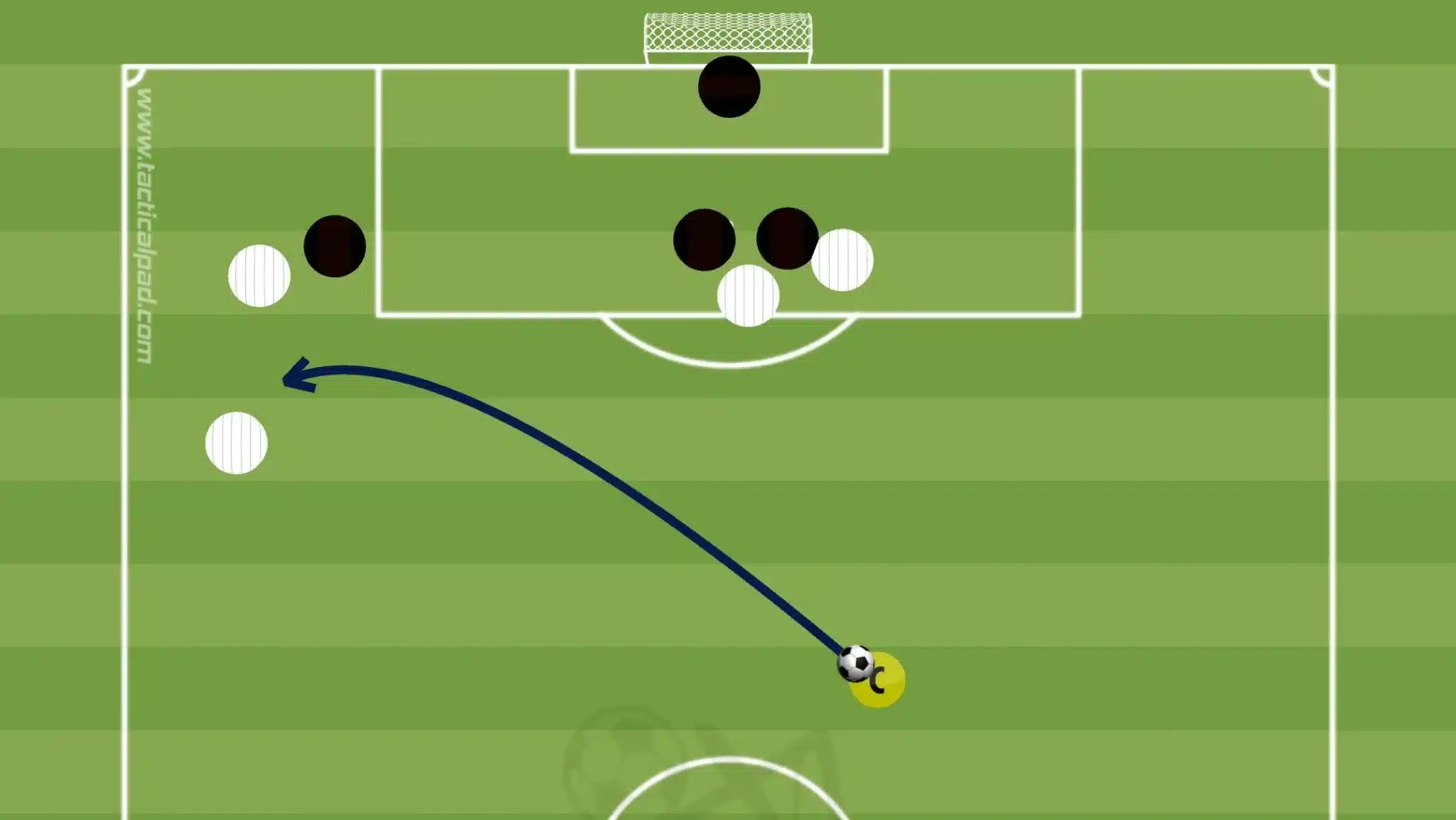
Poor crossing accuracy is not always caused by weak kicking technique. Many crosses fail because the ball is delivered before teammates are ready, after the best space has disappeared, or from a body position that limits control. Better timing helps the crosser see the target, coordinate with attacking movement, and choose a delivery that fits the situation.
Look Up Before the Crossing Moment
Crossing should begin with information. Before reaching the delivery point, scan the penalty area and identify where teammates, defenders, and open spaces are developing.
A player who looks down at the ball for the entire approach often crosses toward an assumed position rather than an actual target.
Footballers combining training with broader team attacking ideas can discuss different options, but the most useful habit is simple: scan before the final touch.
Improve the Final Touch Before Delivery
The touch that sets up the cross strongly affects accuracy. If the ball is pushed too far ahead, the player may have to stretch. If it stays underneath the body, the swing becomes crowded.
A controlled final touch creates time to lift the head and strike cleanly.
Match the Cross to the Attacking Run
There is no single ideal crossing technique. A near-post runner may need a fast ball delivered early, while a late runner arriving near the penalty spot may benefit from a delayed cutback.
General attacking football reading can support tactical discussion, but timing between the crosser and runners has to be practiced together.
Players should repeat combinations rather than treating every cross as an isolated action.
| Crossing Situation | Useful Delivery | Timing Cue |
|---|---|---|
| Runner attacks near post | Fast low cross | Deliver as run accelerates |
| Space behind defense | Early curling ball | Release before line drops |
| Winger reaches byline | Cutback | Wait for supporting runner |
| Back-post advantage | Lofted delivery | Allow runner time to arrive |
Improve Technique Without Overhitting
A common response to inaccurate crossing is to kick harder. Extra power can make the ball harder to control without solving the direction problem.
Focus instead on a stable standing foot, suitable body angle, clean contact, and a clearly selected target zone. Players exploring wide-play tactical material can compare delivery choices, but execution still depends on repeated technical practice.
Crosses can be trained into zones marked with cones or small target areas. Once accuracy improves, introduce moving attackers and defenders.
Train Decision-Making From Different Positions
Crosses from deep areas, the edge of the penalty area, and the byline require different timing. Training from only one spot limits the player’s options.
Create sequences where the winger sometimes crosses early, sometimes drives closer to goal, and sometimes combines with a teammate.
The player should learn to recognize which choice fits the defensive position rather than crossing automatically.
Why More Crosses Do Not Always Mean Better Crossing
High repetition helps only when players understand what they are trying to improve. Sending thirty balls into an empty penalty area without a target can reinforce rushed technique and poor decision-making.
Another mistake is judging every unsuccessful cross as inaccurate. A delivery can reach the intended zone while the attacking run arrives late. Review both sides of the action: where the ball was delivered and whether teammates attacked that space at the expected moment.
Frequently Asked Questions
How can I make my crosses more accurate?
Choose a target before striking, improve the final setup touch, keep the body balanced, and practice specific deliveries repeatedly before adding defenders and moving teammates.
Should I cross early or reach the byline?
Both options can work. The decision depends on available space, defender positioning, teammate movement, and whether an early delivery can reach an attacker before the defense becomes organized.
Why do my crosses keep going over everyone?
Too much power, leaning backward, striking underneath the ball, or crossing while off balance can produce excessive height. Reduce the force and focus on cleaner contact.
Deliver the Ball at the Right Moment
Accurate crossing comes from technique and timing working together. Scan before receiving or taking the final touch, identify the run you want to serve, and choose the delivery that matches it. Practice target zones first, then introduce realistic movement and pressure. A well-timed cross does not need to be spectacular. It needs to arrive where a teammate can actually use it.