

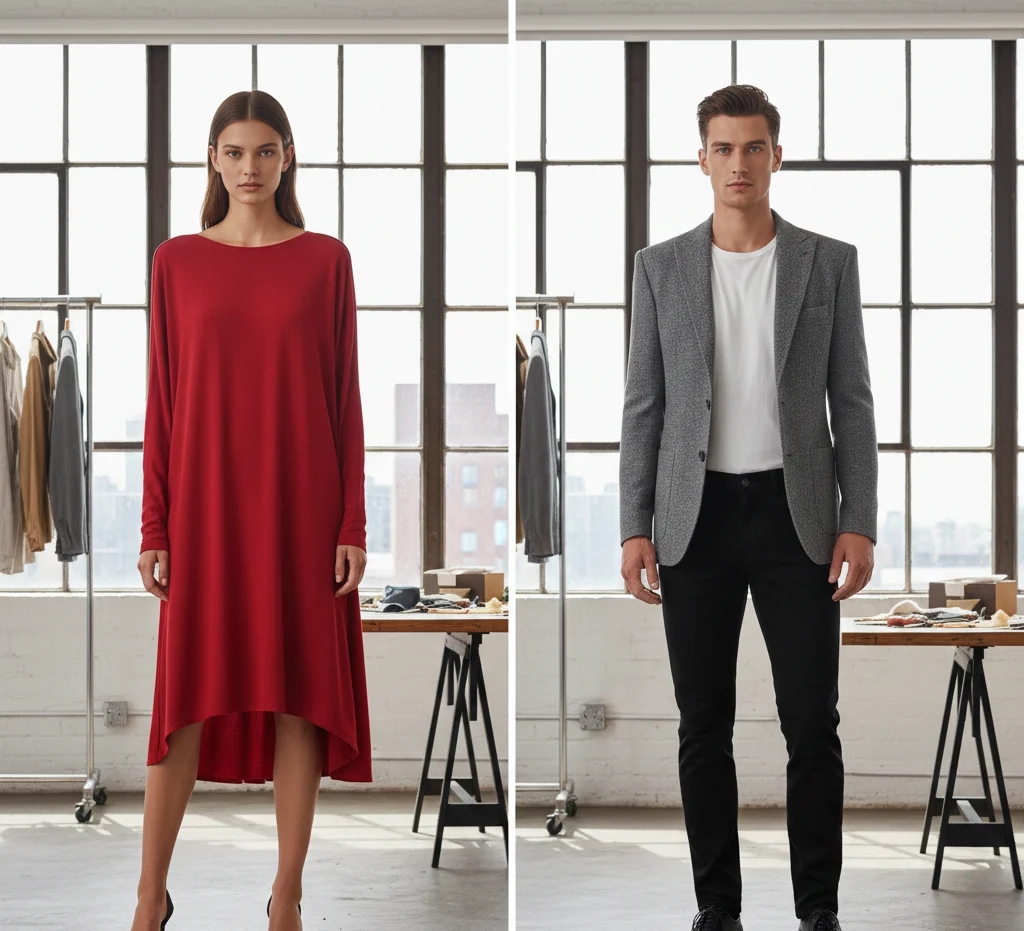
Tight outfit problems often come from cut and proportion rather than the number printed on a size label. Clothing can technically fit while still pulling, restricting movement, riding upward, or creating pressure in the wrong places. Choosing cuts that follow your body’s movement can improve comfort without forcing you into dramatically larger or shapeless garments.
Look for Signs the Cut Is Working Against You
Pay attention to what happens when you sit, walk, bend, or reach. A garment that looks fine while you’re standing still may become uncomfortable as soon as you move.
Pulling around buttons, strained seams, constant waistband adjustment, or sleeves that limit reaching suggest that the garment’s shape may not suit your proportions.
Fit Is More Than the Label
Two garments carrying the same size can fit completely differently because pattern design, fabric, rise, shoulder width, and taper all affect the result.
Checking everyday clothing fit examples may help illustrate why similar-looking items can create different levels of ease depending on their cut.
Choose More Room Where You Need Movement
Extra space doesn’t need to exist everywhere. You might need more room through the thighs but prefer a tapered ankle, or require additional shoulder space while still wanting a neat waist.
Look for cuts designed around those differences. Straight-leg trousers, relaxed tapers, fuller sleeves, stretch panels, or alternative rises can solve specific pressure points without making an outfit look oversized.
| Fit Problem | Cut to Consider | Potential Benefit |
|---|---|---|
| Tight thighs | Straight or relaxed leg | Easier movement |
| Pulling shoulders | Roomier upper cut | Better arm reach |
| Waist pressure | Different rise | Improved sitting comfort |
| Restrictive sleeves | Fuller sleeve shape | Less pulling |
Check Fabric Before Blaming Size
Fabric behavior can completely change comfort. A rigid material may require more ease than a fabric containing some stretch.
Thickness matters too. Heavy seams, stiff waistbands, and firm denim may feel tighter than softer garments with similar measurements.
Exploring clothing shape comparisons can provide broader styling context, but your own movement test remains more useful than judging fit from appearance alone.
Try the Sitting Test
Sit normally for a few minutes. If a waistband digs sharply, the front pulls, or you immediately want to undo a fastening, the garment may not be practical for extended wear.
Clothes should work during ordinary movement, not only during a mirror check.
Adjust Styling Around Close-Fitting Pieces
A fitted garment can still be comfortable if the rest of the outfit gives you room to move. Pairing narrow trousers with a softer top, or a closer shirt with relaxed bottoms, can reduce the feeling that the entire outfit is restrictive.
References featuring balanced wardrobe combinations may also offer ideas for mixing fitted and relaxed pieces without losing a clean silhouette.
Where People Often Go Wrong With Tight Fits
Sizing up automatically isn’t always the best fix. A larger version may solve one pressure point while creating excess fabric somewhere else.
The more useful question is where the garment feels wrong. If shoulders pull, choose a different shoulder cut. If the waist is uncomfortable but the hips fit, try another rise or waistband design. Better fit often comes from changing shape, not chasing a different label.
Frequently Asked Questions
How tight should everyday clothes feel?
Everyday clothing should generally allow normal sitting, walking, bending, and reaching without persistent pressure or repeated adjustment. Preferences differ, but regular discomfort is a sign to reassess the fit.
Does stretch fabric always make tight clothing more comfortable?
No. Stretch can improve movement, but an overly small garment may still feel restrictive. Fabric recovery, seam placement, waistband design, and overall cut also influence comfort.
Why do trousers fit standing up but hurt when sitting?
Sitting changes body position and increases pressure around the waist, hips, and thighs. A different rise, waistband construction, or roomier cut may provide a better seated fit.
Choose Clothes for Movement, Not the Mirror
Evaluate clothing while doing the things you’ll actually do in it. Walk, sit, reach, and bend before deciding the fit works. A better cut should provide room exactly where you need it while keeping the overall shape you prefer, which is far more useful than relying on size labels alone.