

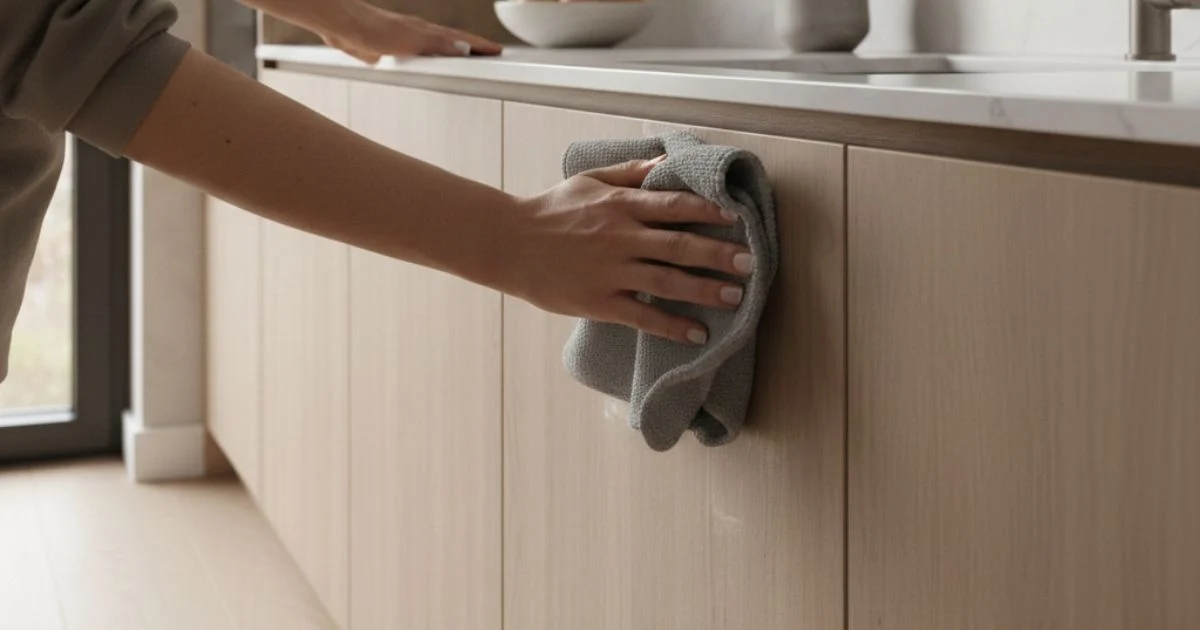
Oily cabinet doors usually develop gradually as cooking vapors mix with dust and fingerprints. Removing that film without dulling the finish requires restraint. Start with the mildest cleaning method that works, keep moisture away from seams and edges, and avoid aggressive abrasives that can turn a small grease problem into permanent surface damage.
Identify the Cabinet Finish Before Cleaning
Painted wood, laminate, thermofoil, sealed hardwood, and unfinished surfaces don’t respond identically to cleaners. If you aren’t sure what you have, begin with a hidden test area before treating the visible door fronts.
People exploring kitchen style references often focus on color and hardware, yet finish type matters just as much for maintenance. Smooth durable surfaces may tolerate routine wiping better than delicate coatings or aging painted finishes.
Avoid soaking cabinet doors regardless of material.
Start With Warm Water and Mild Soap
Mix a small amount of mild dish soap with warm water, dampen a soft microfiber cloth, and wring it thoroughly. Wipe the greasy area gently, working in manageable sections.
General kitchen care ideas can support a practical cleaning routine, but cabinets usually don’t require a shelf full of chemicals. Mild soap is often a sensible first attempt because it can break up cooking grease without relying on abrasive particles.
Follow with a second lightly dampened cloth if residue remains, then dry promptly.
| Problem | First Approach | Avoid |
|---|---|---|
| Fingerprints | Damp microfiber | Rough scrub pads |
| Light grease | Mild dish soap | Flooding seams |
| Sticky buildup | Repeat gentle passes | Metal scrapers |
| Unknown finish | Hidden-area test | Strong solvent first |
Give Heavy Buildup More Time, Not More Force
Thick grease may need several gentle cleaning passes. Pressing harder can polish one area differently from the surrounding finish or remove paint from edges.
Material and finish choices found in cabinet finish ideas also show why universal cleaning advice can be risky. A method that works well on laminate may be unsuitable for painted, waxed, or natural wood.
Apply cleaner to the cloth rather than spraying heavily onto doors. This gives better control around hinges, joints, and decorative trim.
Prevent New Grease From Building Up
Cooking ventilation makes a noticeable difference. Use the range hood when frying, sautéing, or cooking foods that release significant steam and oil, and clean its filters according to manufacturer instructions.
Wipe cabinet handles and the doors closest to the stove more frequently than cabinets across the room. Small amounts of fresh grease lift more easily than an old sticky layer.
Keep frequently touched pulls clean as well. Dirty hardware transfers oils back onto freshly wiped doors.
Cleaning Mistakes That Can Dull Cabinets
Abrasive powders, melamine-style erasers, harsh scrubbers, and strong solvents can alter certain finishes. Even a cleaner marketed as powerful isn’t automatically appropriate for cabinetry.
Another mistake is leaving water sitting along door edges. Swelling, peeling, or separation can occur on moisture-sensitive materials. Work with a well-wrung cloth and dry the surface after cleaning. If the finish becomes tacky, cloudy, or discolored during testing, stop before continuing across the rest of the kitchen.
Frequently Asked Questions
What removes kitchen grease from cabinet doors?
Warm water with a small amount of mild dish soap is a reasonable starting point for many washable cabinet finishes. Use a soft cloth, avoid excessive water, and test an inconspicuous area first.
Can vinegar damage kitchen cabinets?
Acidic cleaners may affect some finishes, coatings, stone surfaces, or surrounding materials. Check the cabinet manufacturer’s care instructions before using vinegar rather than assuming it is safe for every kitchen surface.
Why do my cabinets still feel sticky after cleaning?
Old grease may require more than one gentle pass, or cleaning-product residue may remain on the surface. Wipe again with an appropriate clean damp cloth and dry thoroughly instead of immediately moving to a stronger abrasive cleaner.
Clean Gently Before Grease Gets Thick
The best cabinet-cleaning routine is usually preventive. Wipe high-contact doors and stove-side cabinets before a visible film develops, use mild products appropriate for the finish, and dry surfaces promptly. Gentle maintenance protects both cleanliness and appearance far better than waiting for heavy grease and attacking it with increasingly aggressive cleaners.