

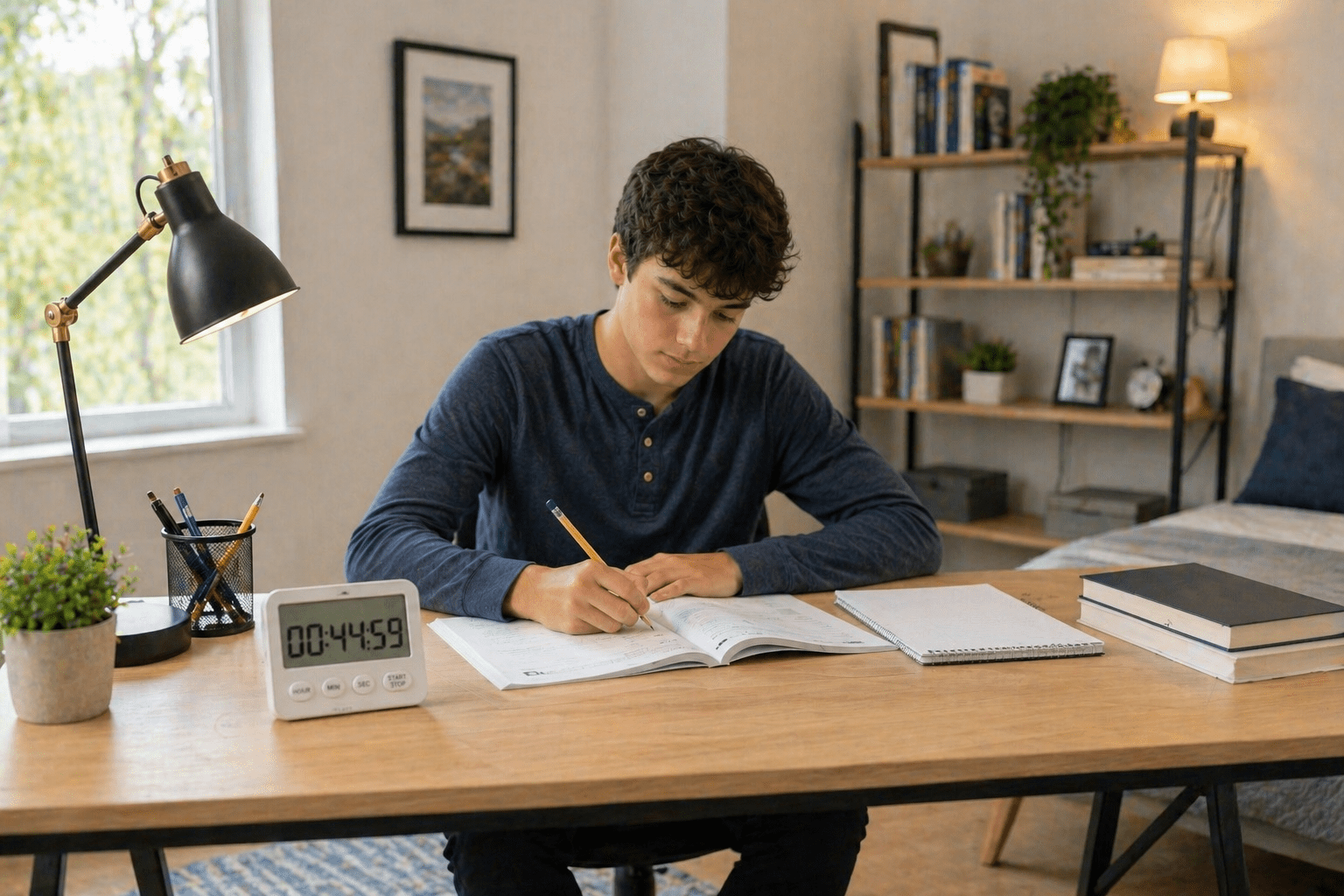
Exam confidence rarely improves from rereading notes alone. Students often understand material in a comfortable study setting but struggle when they must recall it quickly, manage a clock, and work without hints.
Practicing under realistic test conditions exposes that gap before exam day. It turns preparation from passive familiarity into active performance.
Confidence Should Come From Evidence
Telling yourself to “be confident” has limited value when you don’t know how you’ll perform under pressure. A stronger form of confidence comes from repeatedly completing exam-like tasks successfully.
Students moving between general-interest websites and study materials can easily mistake recognition for mastery. Seeing a familiar answer isn’t the same as producing it independently.
Test Recall Without Your Notes
Close the textbook. Hide the answer key. Work through a question from memory before checking whether you’re correct.
That small change reveals what you can actually retrieve when support isn’t available.
Recreate the Conditions That Make Exams Difficult
If the real exam is timed, some practice sessions should be timed. If calculators, notes, or reference sheets aren’t allowed, practice occasionally without them.
Students browsing creative online spaces and other distractions may study for long periods while spending little time in sustained exam-style concentration.
| Practice Method | What It Tests | Main Benefit |
|---|---|---|
| Timed questions | Speed | Reveals pacing |
| Closed-book recall | Memory | Finds knowledge gaps |
| Full practice paper | Endurance | Builds consistency |
| Mixed questions | Flexibility | Prevents pattern guessing |
Realistic practice doesn’t mean every study session should feel like an exam. Learning sessions and performance sessions serve different purposes.
Review Mistakes by Type
A wrong answer can come from several different problems. You may not know the material, misread the question, forget a step, rush the calculation, or run out of time.
Using broader reading platforms for general learning can expose you to many ideas, but exam improvement depends heavily on understanding your own error patterns.
After a practice session, classify mistakes. If most errors come from rushing rather than missing knowledge, studying another chapter may not solve the real problem.
Build Pressure Gradually
Starting immediately with a full three-hour mock exam can be discouraging. Begin with short timed sets, then increase the duration and difficulty as your performance becomes steadier.
You can also practice starting a question even when you don’t feel certain. Exams reward productive action, not waiting until confidence feels perfect.
Why Endless Practice Tests Can Backfire
More mock exams don’t automatically create better results. Repeating papers without reviewing mistakes can turn incorrect approaches into habits.
Another mistake is practicing only material you already enjoy. Familiar topics make confidence feel high while weaker areas stay hidden. Good preparation needs enough challenge to reveal what still breaks down under pressure.
Frequently Asked Questions
How many practice exams should I take before a test?
There is no universal number. The better measure is whether practice continues revealing useful weaknesses and whether your timing, accuracy, and ability to recover from difficult questions are improving.
Why do I know the material but freeze during exams?
Knowing material in a relaxed setting and retrieving it under time pressure are different skills. Timed recall practice can make the exam environment feel more familiar and expose where pressure disrupts performance.
Should every study session be timed?
No. Some sessions should focus on learning, understanding, and correcting mistakes without pressure. Timed practice is most useful when you want to test retrieval, pacing, decision-making, and endurance.
Turn Preparation Into Proof
Exam confidence becomes stronger when you have evidence that you can perform under realistic conditions. Don’t judge readiness only by how familiar your notes look.
Practice retrieving answers, work against a clock, analyze mistakes, and gradually increase the pressure. By exam day, the conditions should feel less like a surprise and more like something you’ve already rehearsed.